Baščaršija and the first coffeehouse
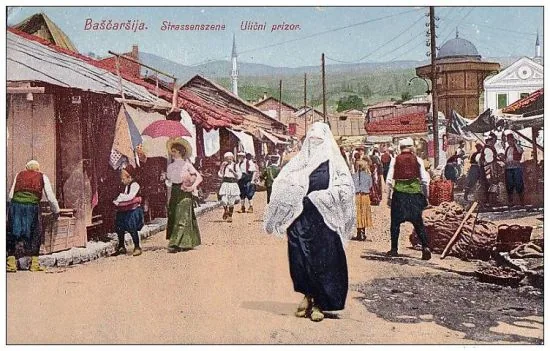
Baščaršija begins in 1462, when the Ottoman governor Isa-beg Isaković builds a caravanserai. It becomes the city's main artery of trade and social life.2
According to Sarajevo's tourist board, the first coffeehouse in town was Hajji Šaban's coffeehouse at Bentbaša, opened in the middle of the 16th century. It worked until 1942.1
Tobacco reaches Herzegovina
A paper in the Yearbook of the Centre for Balkan Studies of the Academy of Sciences of Bosnia and Herzegovina (2024) says tobacco appears in Herzegovina in the 17th century. Until 1880 there is no organised production, only individuals growing it for themselves.3
The Dubrovnik archive first mentions tobacco smuggled from Herzegovina in 1676. Under Ottoman rule there was no monopoly, only a tax on production.3
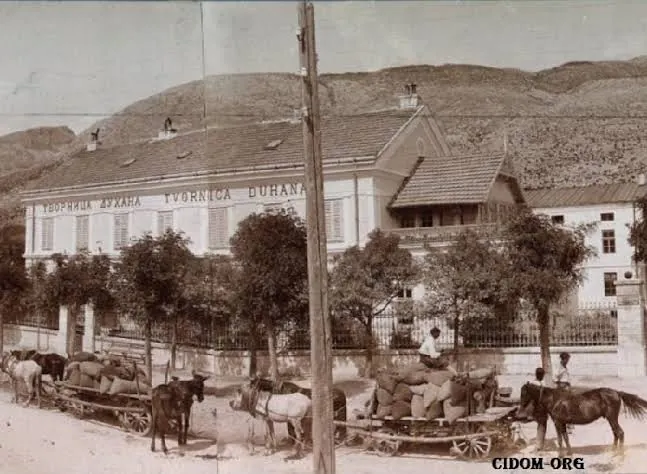
Under Austria-Hungary, the Mostar tobacco factory and buying offices across Herzegovina were set up in 1880. At the end of the 19th century Herzegovinian tobacco wins prizes at exhibitions in European cities.3
Pipe makers, chibouk and hookah
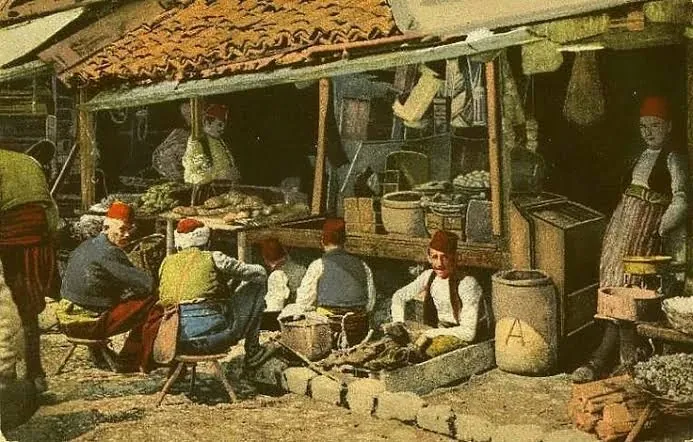
The same paper records that pipes for the chibouk and the hookah were made by luledžije, pipe makers, in Sarajevo, and that besides the chibouk people also smoked the hookah.3
Luledžina street in Baščaršija is named after Hajji Hafiz Mustafa Muhić, nicknamed Luledžija because he made pipes when he was young.4
The last chibouk maker in Mostar worked until the First World War.3
Back to Baščaršija
Sarajevo's tourist board writes that after a pause of several decades the hookah is very popular again, especially in Baščaršija.1
One venue in Baščaršija says it offers more than 100 hookahs.7
The 2022 law
In the Federation of Bosnia and Herzegovina, the law on the control and limited use of tobacco and other smoking products was signed on 25 May 2022. It bans smoking in enclosed public places, workplaces and public transport.6
Venues that serve only drinks may have a smoking area if they meet conditions such as ventilation and signage. Hookah bars follow the same rules as other bars, minors are not allowed in, and no food is served there.5
At the time the law was passed, Republika Srpska had no similar rules.6
On the journey through 14 stations
How we know
- 1Visit Sarajevo, "Days and nights"
- 2Visit Sarajevo, "Explore Baščaršija"
- 3Godišnjak Centra za balkanološka ispitivanja ANUBiH 39 (2024), "On the history of tobacco in Herzegovina until the end of the First World War", str. 189-198
- 4Visit Sarajevo, "Luledžina"
- 5N1 BiH, "New smoking regulations for hospitality in FBiH take effect"
- 6Génération Sans Tabac, "Bosnia and Herzegovina enacts anti-smoking law"
- 7Visit Sarajevo, "Mahala"